



Scientists discover how plants talk to beneficial bacteria









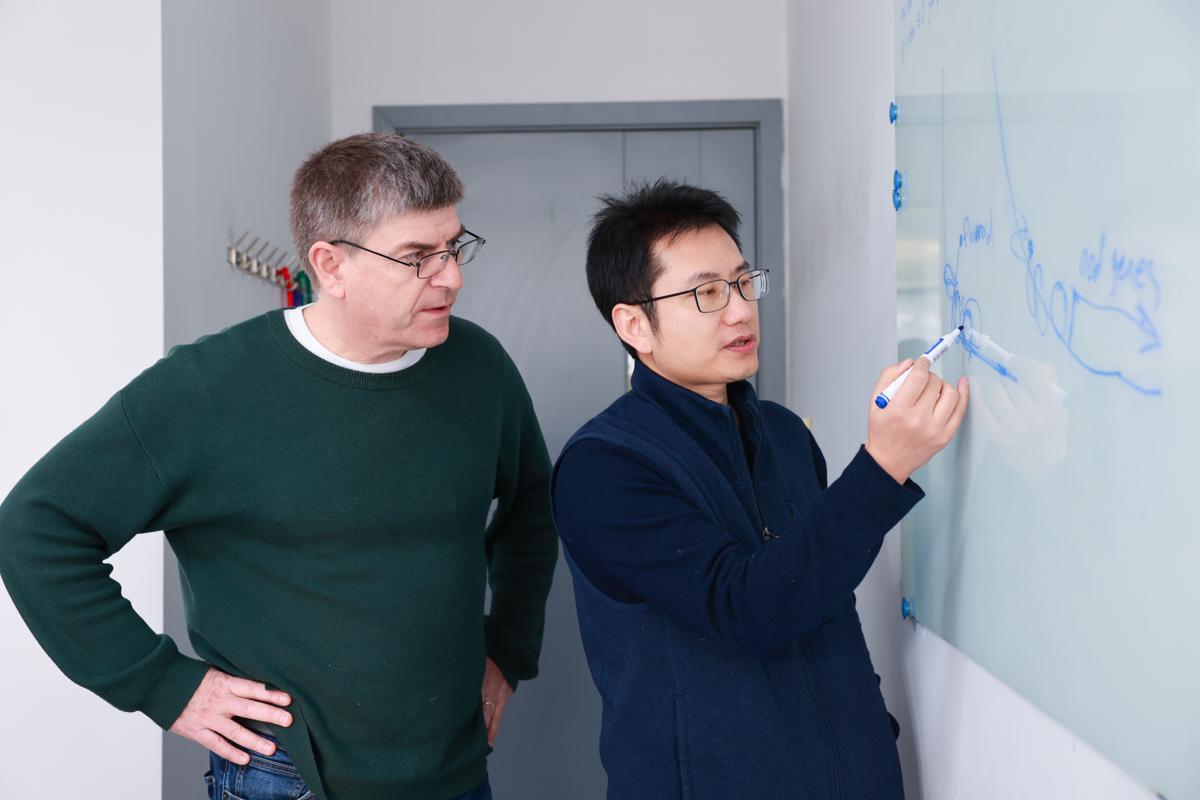
Scientists at the Chinese Academy of Sciences Center for Excellence in Molecular Plant Sciences have found how legume plants communicate with beneficial soil bacteria, paving the way for designing efficient nitrogen fixation systems, thereby reducing the reliance of agriculture on chemical nitrogen fertilizers.
Their research findings hold the potential to extend nitrogen-fixing symbiosis to non-legume crops, such as rice and corn, the Shanghai-based researchers said.
For a long time, scientists agreed that legume roots secrete a chemical signal called flavonoids, which is recognized by a transcription factor in the rhizobia named NodD.
In this study, they successfully resolved the high-resolution crystal structure of the complex formed between the NodD protein of pea rhizobia and a flavonoid compound. It elucidated precisely how NodD recognizes flavonoids and revealed the key structural elements in NodD that determine the specificity of signal recognition.
The researchers suggested that such precise recognition stems from millions of years of co-evolution in overlapping habitats.
"To ensure successful partnerships, each legume species needs to accurately identify its preferred rhizobia strain," Canada's Jeremy Murray, one of the lead scientists on the team, said. "They achieve this through a mutual 'double-lock and key' system — the bacteria recognize unique flavonoid signals from the plant, and, in turn, the plant recognizes specific signals from the rhizobia."
"This chemical tête-à-tête prevents partner mix-ups when multiple legume species grow nearby one another," he said.
A paper about the research led by Murray and Zhang Yu from the Shanghai-based CAS center was published in the journal Science on Friday.


- Guangzhou's Haizhu launches AI scene trading platform
- Meet ancient Americas in Shanghai
- Guangdong reports rise in flu activity, mask wearing suggested
- Scientific research team returns after 156-day journey
- Immersive Henan theater complex brings history to life for visitors
- Beijing opens selected subway trains to cyclists





