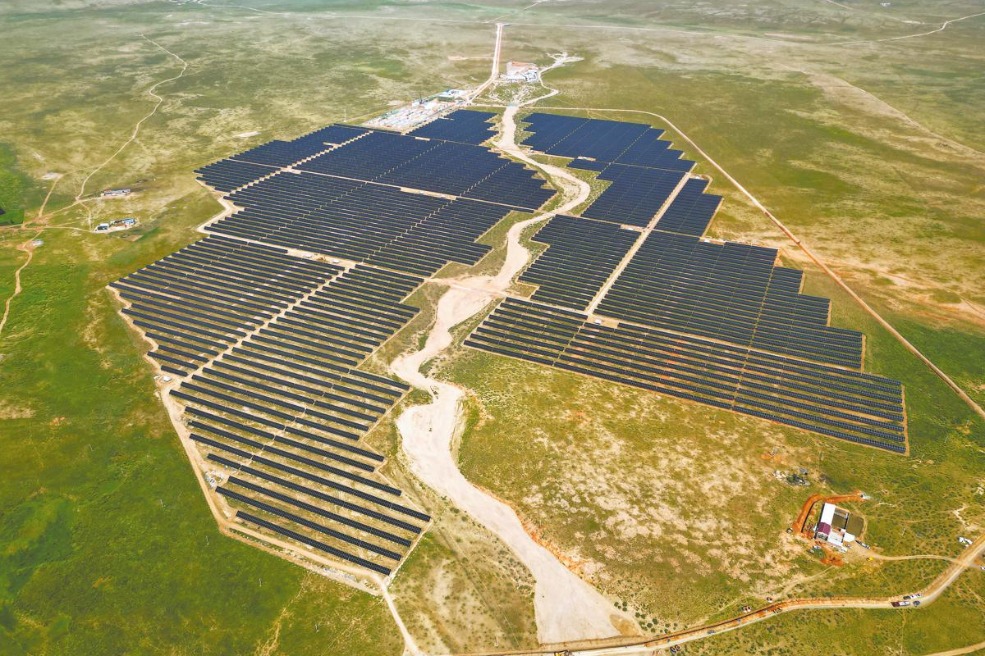



Asia's rise and Europe's structural decline









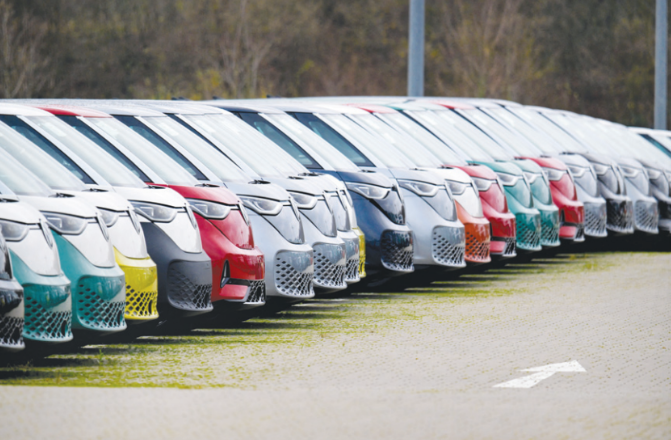
The global economic balance of power has transformed in the past two decades. Once dominated by the West, the world economy is now being reshaped by Asia, especially by China.
A 2025 ranking of the world's 30 largest economies shows that China's labor productivity, measured as GDP per hour worked, soared by about 170 percent from $11 in 2005 to $30 in 2024. This spectacular performance far exceeds the improvements recorded by major economies during that period.
China's ascent is in stark contrast to the stagnation in many European economies during the same period. According to the same 2025 ranking, the labor productivity was barely noticeable in several Western economies. Italy recorded a 2 percent rise, the United Kingdom roughly 10 percent growth, and France and Norway around 14 percent. Such modest increases over 20 years reflect structural inertia rather than cyclical downturns.
Broadly speaking, productivity growth has remained weak across Organization for Economic Co-operation and Development economies. In 2024, productivity across OECD countries (excluding Turkiye) grew by an average of about 0.6 percent, with Europe underperforming and the eurozone registering a weak recovery. This year's underperformance underscores that the European slowdown is deep-rooted and continues to weigh on structural competitiveness.
The divergence between Asia and Europe is not merely statistical noise but a signal of the systemic differences in development strategies, economic structures and long-term commitments. Asia's surge in productivity is underpinned by sustained high investment rates, often reaching 30-40 percent of the GDP in many countries, which enable modernization of the infrastructure and industrial capacity.
Also, many Asian economies are not burdened with outdated industrial legacy because they built modern, efficient production systems from scratch. They integrated into global value chains, enabling technology transfer, managerial know-how, competitiveness pressure and rapid quality improvements.
Massive urbanization throughout Asia has shifted labor from low-productivity agriculture to manufacturing and services, significantly raising the average output per hour. Equally important has been the policy consistency in Asian countries: long-term industrial strategies focused on education, export competitiveness and technological upgrading. In China, for instance, the combination of a vast labor force, deep capital investment, expansion into high-tech sectors and modern logistics and infrastructure networks created a uniquely favorable environment for a productivity revolution.
European economies, by contrast, appear fatigued. After the global financial crisis of 2008, investment slowed, risk appetite declined, and many countries entered a prolonged phase of underinvestment. Labor markets were affected by demographic decline, aging populations, shrinking workforces, and rising social expenditures. High energy costs, elevated input prices, regulatory burdens, rigid labor policies, and high taxation have undermined competitiveness, dampening incentives to modernize production or shift toward high-value-added sectors.
Crucially, much of Europe's catch-up advantage — the gains from decades of industrial modernization and technological imitation — has already been exhausted. What remains is the far more challenging task: generating productivity gains through genuine innovation.
Asia's success is not about low wages or temporary advantages; it stems from durable structural strengths. Labor productivity in Asia has risen through genuine increases in output per hour, not simply by extending working hours or inflating employment statistics.
Furthermore, urbanization and the reallocation of labor from agriculture to industry and services dramatically increased average productivity per worker. Combined with high rates of fixed-asset investment and policy stability, these conditions provide a robust foundation for continued progress — far beyond what Europe currently exhibits.
China's role stands out because of both its scale and ambition. With hundreds of millions of workers, aggressive capital deepening, rapidly growing high-tech manufacturing, expanding infrastructure networks, and a steadily improving skill base, China is no longer just catching up. In many sectors, it is setting global standards.
Europe's decades of relative economic dominance are being challenged not by cyclical downturns, but by structural decay. In a global environment where productivity increasingly determines economic relevance, geopolitical influence, and long-term prosperity, the center of gravity of the world economy is shifting decidedly eastward.
From electric vehicles and industrial robotics to digital payments and 5G infrastructure, China is moving from imitation to innovation.
In sum, the data leave no room for doubt: Asia — spearheaded by China -has become the world's productivity growth engine. The gap between Asia and Europe is not narrowing; in many areas, it is widening.
Unless European economies adopt radical reforms — including renewed investment, deregulation, competitiveness incentives, technological ambition, and a coherent long-term industrial strategy — they risk remaining permanently on the wrong side of a productivity divide whose consequences are only beginning to unfold.
The author is the former prime minister of the Kyrgyz Republic and a visiting senior fellow at the Institute for Global Cooperation and Understanding at Peking University.
The views don't necessarily represent those of China Daily.
If you have a specific expertise, or would like to share your thought about our stories, then send us your writings at opinion@chinadaily.com.cn, and comment@chinadaily.com.cn.