



China steps up cultural heritage protection to keep its past alive for the future









BEIJING -- China, a civilization with more than 5,000 years of history, is accelerating efforts to protect and carry forward its cultural heritage through stronger institutions, new technologies, expanding public cultural services, and deeper international cooperation.
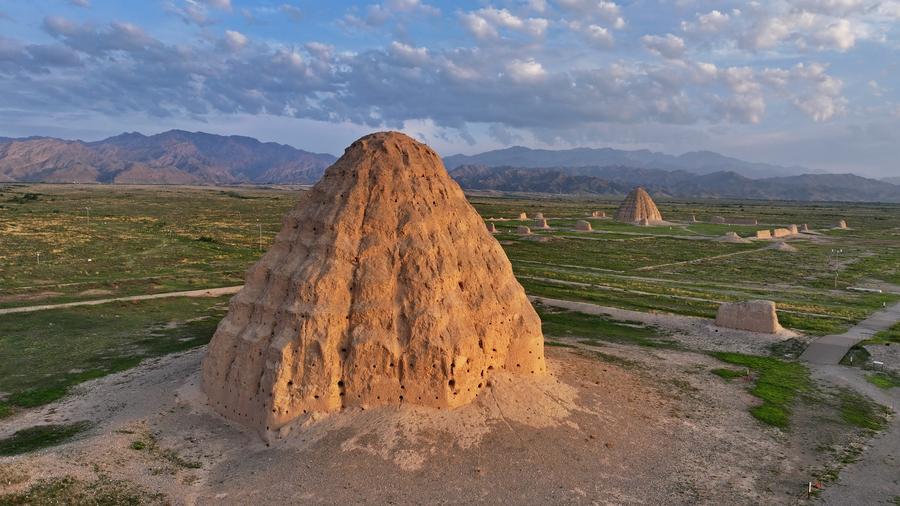
From 2021 to 2025, four cultural sites -- namely the Beijing Central Axis, an ensemble of ancient landmark structures; the Cultural Landscape of Old Tea Forests of Jingmai Mountain in Pu'er; the Xixia Imperial Tombs dating from the 11th to 13th centuries; and the ancient maritime trade center of Quanzhou -- were added to the UNESCO World Heritage List. Boasting a total of 60 sites, the country now ranks second globally, just behind Italy with 61 sites.
According to Xie Bing, deputy head of the National Cultural Heritage Administration (NCHA), steady progress is being made to nominate additional sites, including Jingdezhen's handmade porcelain industry heritage sites in Jiangxi, the Sanxingdui and Jinsha ruins in Sichuan, the ancient waterfront towns south of the Yangtze River, and the Maritime Silk Road.
Behind the expansion of China's World Heritage roster is a growing national commitment to cultural heritage preservation. China has proposed advancing cultural heritage protection more systematically and placing it under unified supervision and inspection during the 2026-2030 development period.
This move builds on changes over the past five years, as the country moves away from a model focused mainly on emergency restoration toward one that integrates both rescue and preventive conservation, while placing greater emphasis on the meaningful use of cultural relics.
The legal framework has been strengthened. Sun Deli, deputy head of the NCHA, noted that China has now established a comprehensive legal system centered on the Law on the Protection of Cultural Relics, supported by six administrative regulations, 10 ministerial rules and more than 400 local regulations.
In March, a revised cultural relics protection law came into force, reaffirming the principles of prioritizing protection, strengthening management, and unlocking the value of cultural heritage. A series of policy documents at both national and local levels has ensured that territorial spatial planning aligns with cultural relics protection requirements.
Technological innovation has become another pillar of heritage protection. Satellite remote sensing, drone-based aerial surveys and AI-powered data analysis now enable continuous monitoring of the conditions of heritage sites, allowing risks to be detected and addressed at an early stage.
Digital technology is also transforming public access to cultural heritage. At the Longmen Grottoes in Henan, inscribed on the UNESCO World Heritage List in 2000, more than two decades of 3D scanning and photogrammetry have created detailed digital archives of its Buddhist sculptures. In Gansu province, the Dunhuang Academy has released high-definition images of 30 Mogao Grottoes -- a World Heritage site since 1987 -- allowing global audiences to explore the ancient caves virtually.
Meanwhile, expanding public cultural services have made heritage more accessible. Across China, more than 7,000 museums -- over 91 percent offering free admission -- now receive nearly 1.5 billion visits annually. The country has also developed 65 national archaeological site parks and more than 200 themed cultural relic tourism routes, linking urban and rural areas through shared historical and cultural resources.
China has expanded its international cooperation on cultural heritage preservation. It has taken the lead in establishing the Alliance for Cultural Heritage in Asia -- the continent's first intergovernmental organization in the field -- as well as the International Organization for Standardization's technical committee on cultural heritage conservation.
From 2021 to 2025, Chinese specialists have carried out six conservation and restoration projects in four countries, while 49 joint archaeological programs involving 28 countries and regions were launched, contributing Chinese expertise to global heritage protection.
Efforts to recover lost cultural relics have also yielded results. Over the past five years, 35 batches totaling 537 cultural relics and artworks lost overseas have been brought back to China.
"We will continue to improve institutional arrangements and strengthen coordination among all parties to bring more lost cultural relics home," said Xie from the NCHA.


- Students paint cheerful faces to celebrate World Smile Day
- Xiong'an's '15-min volunteer circle' serves residents and relocated entities
- China pledges to step up algorithm governance on lifestyle service platforms
- Macao university hosts smart tourism symposium featuring innovation
- China's first film music museum opens on Gulangyu Island
- China's western rail gateway speeds freight links to Europe, Central Asia





