



Xinjiang's Tumxuk harvests rice from desert saline-alkali fields









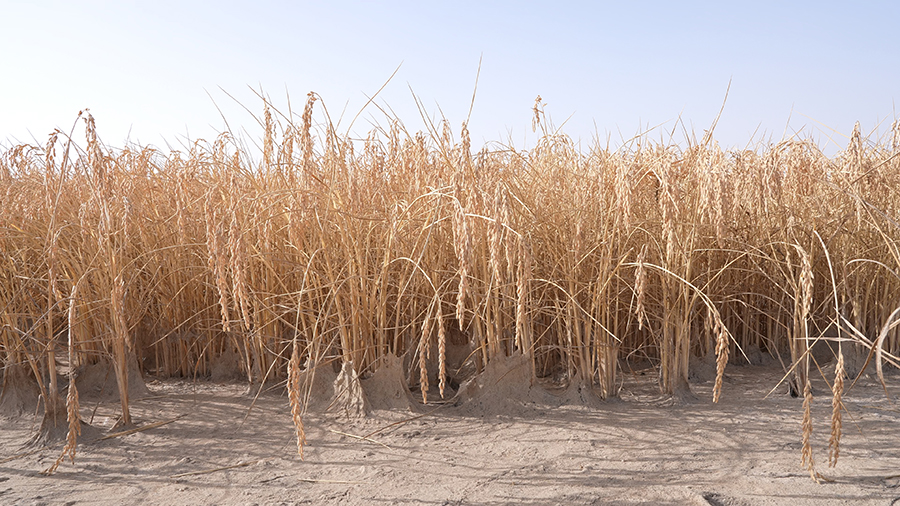
Around 267 hectares of desert saline-alkali rice fields in Qianhai town of Tumxuk city, Xinjiang Uygur autonomous region, have recently been harvested. Once severely desertified land where little could grow, the area has been transformed into test fields for large-scale rice cultivation, aiming to restore local ecology and increase agricultural income.
Located on the western edge of the Taklimakan Desert, China's largest desert, Tumxuk began rehabilitating this saline-alkali land earlier this year. In June, specially bred drought-resistant and salt-tolerant rice varieties were planted following the soil improvements.
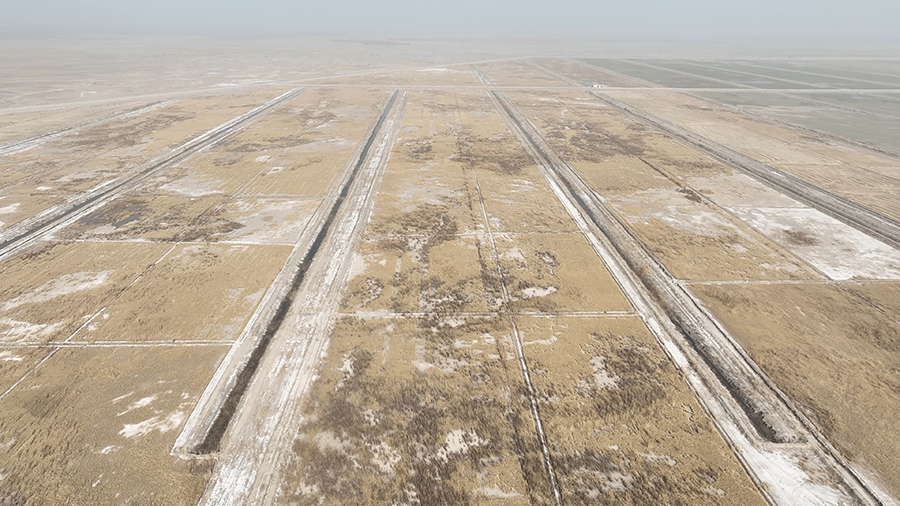
Local growers and technicians adopted an intermittent irrigation method once the late-planted rice plants grew to 1 to 3 centimeters in height, creating an aerated environment for root growth while reducing water evaporation.
Technician Zhang Yuanqiang said this water-conservation and salt-leaching approach saved 20 to 30 percent in water costs.
To ensure rice quality and avoid chemical damage to the soil, no pesticides were used. Zhang said they took full advantage of the abundant sunlight for natural pest control, while employing in-situ salt leaching and leaving the straw in place to achieve a virtuous cycle — nurturing rice with water, improving the soil with rice plants and conserving water with the soil.
He added that the desert rice fields have produced more than 100 kilograms per mu (0.07 hectares), which is considered quite satisfactory.
Rice grower Zhang Fei said since the harvest they have been collaborating with a rice processing company to facilitate subsequent sales.




- IP protection for new fields to improve
- Draft rules define premade dishes in consumer interest
- Self-powering pacemaker could last a lifetime
- China intensifies crackdown on misuse of personal data
- China issues new rules classifying online content harmful to minors
- Chinese vice-premier urges efforts to consolidate poverty alleviation achievements