


Coordinate domestic economic work with intl challenges









The recently held Central Economic Work Conference laid out major arrangements for economic work in 2026. As the opening year of the 15th Five-Year Plan (2026-30),2026 carries particular significance.
The conference aligns closely with the Recommendations of the Central Committee of the Communist Party of China for Formulating the 15th Five-Year Plan for National Economic and Social Development, translating broad strategic vision into more concrete and actionable tasks — a shift from freehand brushwork to meticulous detail.
In response to the adverse external environment, the Chinese government made timely assessments and contingency plans, listing the prevention and mitigation of external shocks as an overarching requirement for last year's economic and government work at the 2024 Central Economic Work Conference and in the Government Work Report released earlier last year.
Last year, the United States launched a wave of tariff actions worldwide. Against the backdrop of escalating Sino-US tariff frictions, the April meeting of the Political Bureau of the CPC Central Committee for the first time called for "coordinating domestic economic work with international economic and trade struggles".
As China's economic resilience in the first half exceeded expectations and bilateral tariff tensions eased markedly, the July Political Bureau meeting removed this wording.
However, the latest Central Economic Work Conference explicitly called for "better coordination of domestic economic work with international economic and trade struggles", retaining the April formulation while adding the word "better". This reflects the authorities' judgment that international economic and trade frictions are long-term in nature, and underscores China's more proactive and confident posture in addressing them.
This assessment is consistent with the judgment in the proposal for the 15th Five-Year Plan regarding China's development environment during the period. The proposal notes that major-country relations will shape the international landscape, and that changes in the global situation will have a profound impact on domestic development. China's development will face both strategic opportunities and risks, with rising uncertainty and unpredictability.
The change in conference wording stems from China's demonstrated capacity for targeted countermeasures in response to external trade pressure, enabling it to gain strategic initiative in handling complex situations. Fundamentally, it reflects the marked enhancement of China's overall national strength in recent years.
The Central Economic Work Conference noted that the economy pressed ahead under pressure last year while advancing toward higher-quality growth.
Amid extreme tariff pressure last year, China's economy demonstrated strong resilience. Real GDP grew by 5.2 percent in the first three quarters, 0.4 percentage point higher than the same period in 2024. Recently, many international institutions have raised their forecasts for China's economic growth in 2025.
However, this has largely been driven by external demand, while the imbalance between strong supply and weak domestic demand remains pronounced, and risks in key areas persist.
Against this backdrop, the conference largely continued the policy stance set at the end of 2024, reiterating the need to "implement more proactive and effective macro policies", stressing the continuation of a more proactive fiscal policy and a moderately accommodative monetary policy, and maintaining the emphasis — first introduced at the April Political Bureau meeting — on stabilizing employment, businesses, markets and expectations.
Several notable adjustments were made to the wording on macro policy orientation compared with 2024.
References to policy "foresight" and "targetedness" were retained, while "effectiveness" was replaced with "coordination". The phrase "seeking progress while maintaining stability, and promoting stability through progress" was revised to "seeking progress while maintaining stability, and improving quality and efficiency".
In addition, references to "cross-cyclical" regulations were added, indicating that while macro policy support will not be withdrawn prematurely, there will be no indiscriminate stimulus measures. Instead, policies will be more precise and leave room for adjustments.
This is in line with the 15th Five-Year Plan proposal, which makes clear that during the period, China will strengthen countercyclical and cross-cyclical regulations, implement more proactive macro policies, and continue to stabilize growth, employment and expectations.
Regarding fiscal policy, the conference replaced the previous year's wording, which called for raising the deficit ratio, increasing spending intensity, expanding the issuance of ultra-long term special treasury bonds, and increasing the issuance and use of local government special bonds — with a call to "maintain necessary levels of fiscal deficit, total debt and overall spending".
The budget deficit ratio this year is expected to remain at around 4 percent, while newly added government debt — including deficits, special bonds and special treasury bonds — may exceed last year's level of 11.86 trillion yuan.
Regarding monetary policy, the conference emphasized making stable economic growth and a reasonable rebound in prices important considerations, and flexibly and effectively using tools such as reserve requirement ratio cuts and interest rate reductions.
After the conference, head of the People's Bank of China — the nation's central bank — said in a media interview that the central bank will continue to properly implement a moderately accommodative monetary policy, carefully managing its intensity, pace and timing to create a sound monetary and financial environment for stable economic growth and financial market stability.
This indicates that the supportive stance of monetary policy will remain unchanged, though expectations of aggressive easing are unrealistic. The focus will be on optimizing the use of structural monetary policy tools, strengthening coordination with fiscal policy and further smoothing policy transmission.
The conference has, for the fourth consecutive year, emphasized maintaining the renminbi exchange rate at a "basically stable, reasonable and balanced level", underscoring that preventing excessive exchange-rate fluctuations remains a top priority.
Expanding domestic demand remains the top task for economic work this year, with the conference calling for "upholding domestic demand as the main driver and building a strong domestic market".
Since May, China and the US have held five rounds of economic and trade consultations. In October, the Kuala Lumpur trade talks resulted in a one-year truce extension, and together with positive factors such as a potential leaders' meeting this year, the easing trend in bilateral economic and trade frictions may continue.
Nevertheless, the complexity and severity of the international economic and trade environment should not be underestimated. The latest US National Security Strategy report positions economic security as "the foundation of national security" and redefines China from "the most significant geopolitical challenge" to "the primary economic competitor", suggesting continued pressure on China through various economic means.
The 15th Five-Year Plan proposal identifies a substantial increase in the level of self-reliance in science and technology as one of seven major goals, with tasks including strengthening original innovation and breakthroughs in core technologies, integrating technological and industrial innovation, advancing coordinated development of education, science and talent, and promoting the Digital China initiative.
In line with this, the conference's section on "adhering to innovation-driven development and accelerating the cultivation of new growth drivers" made arrangements covering education, science and talent development, international innovation hubs, the role of enterprises as innovation leaders and artificial intelligence.
Compared with the previous year, the conference moved the task of defusing risks in key areas to a later position, making "safeguarding the bottom line and prudently resolving risks in key areas" the eighth priority task. This reflects phased progress in risk mitigation. Also, a notable adjustment was the removal of the phrase "stabilizing the property and stock markets", consistent with the recovery and improvement seen in domestic capital markets last year.
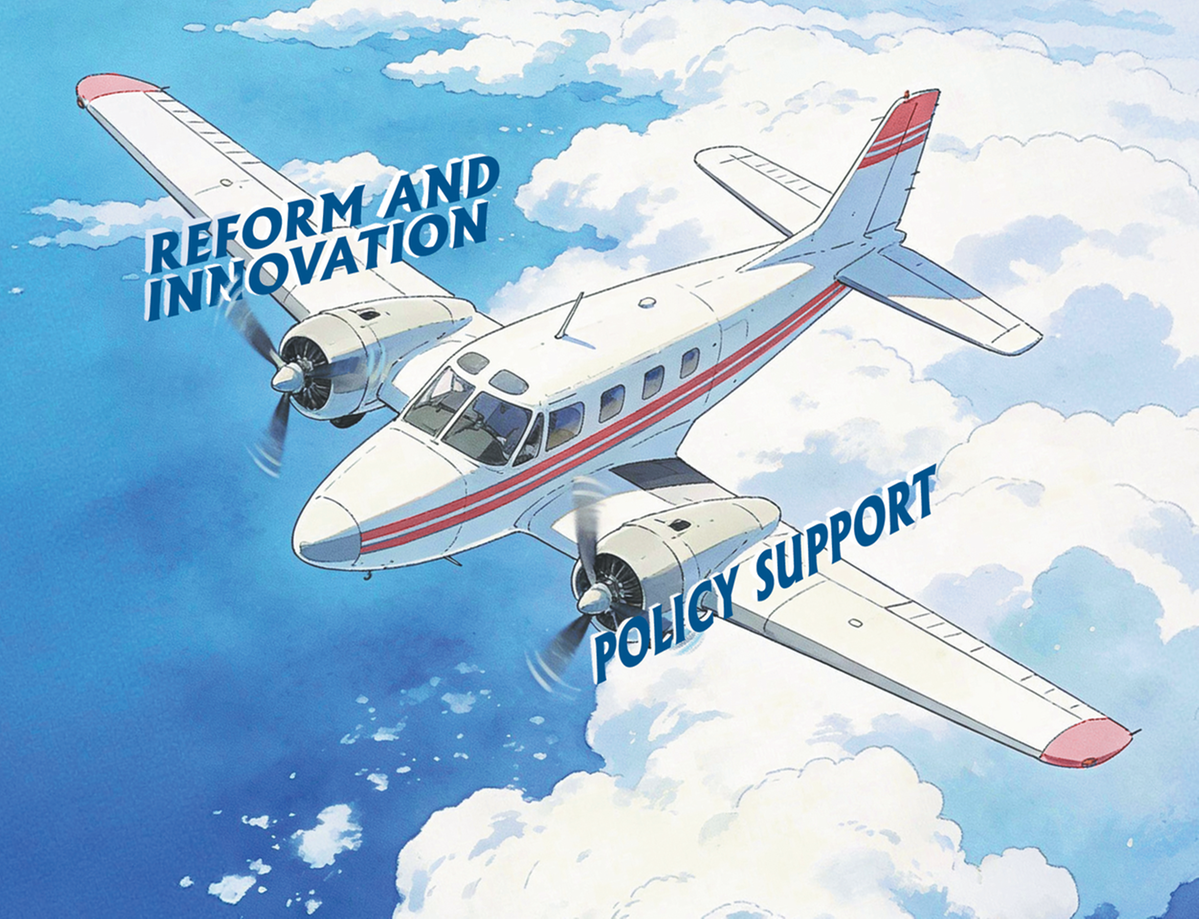
In sum, at this critical juncture marking the start of the 15th Five-Year Plan, the Central Economic Work Conference mapped out the main thread of economic policy. Going forward, all parties are expected to maintain a pragmatic and proactive approach, address concrete challenges, enhance the sense of gain among market entities, strengthen coordination between reform and policy, and promote sustained improvement in economic performance and market expectations — ensuring a solid and successful start to the 15th Five-Year Plan.
The writer is global chief economist at BOCI China.
The views do not necessarily reflect those of China Daily.