


Solar shelters shrubs to stunt Inner Mongolia's shifting sands
Integrated soil restoration pilot project gains ground in China's rugged north










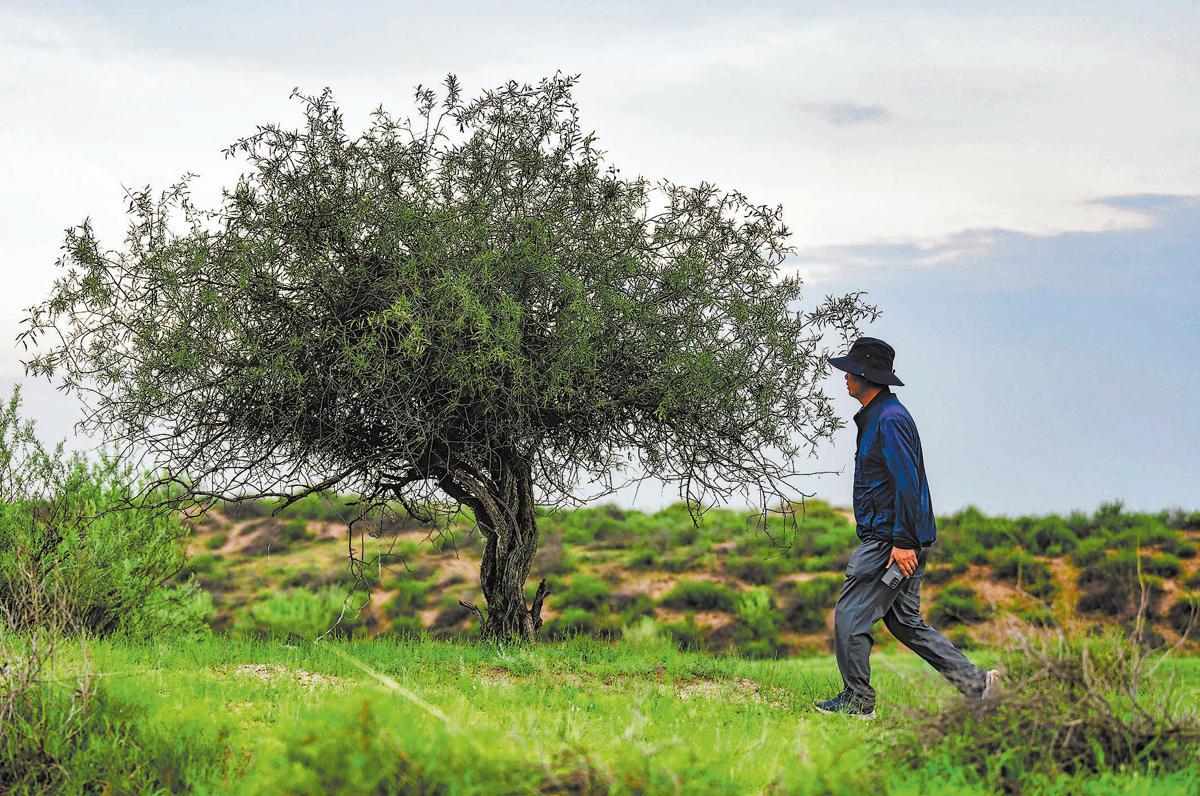
Turning grass grown for sand control into livestock feed forms a "green chain" that strengthens both ecology and industry, Li said.
In addition to caragana, Ulaanqab's grass seed industry has grown to produce high-quality seeds of major species, including alfalfa, smooth brome and crested wheatgrass, with an annual output of 540 tons.
The region, once dependent on external seed supplies for restoration, today relies on its own production, forming a sustainable cycle.
"Take smooth brome, for instance. Its lush growth and high protein content make it both excellent for ecological restoration and a premium forage grass," said Yao Junwen, head of Huiteng Wolf Totem Agriculture and Animal Husbandry Co.
These grass species have thus become the foundation of Ulaanqab's animal husbandry industry. Their abundance and economic value have attracted feed-processing enterprises. A total of 32 caragana processing companies operate in the city, supplying markets such as Ordos in Inner Mongolia and Zhangjiakou in Hebei province.
Li said the model is a virtuous cycle, in which the shrubs are coppiced to support both harvesting and renewed growth.
"The 'coppicing for rejuvenation' method preserves ecological benefits while providing enterprises with low-cost caragana forage," he said.
Contact the writers at lishangyi@chinadaily.com.cn





