


KUNSHAN SETTING UP WORLD-CLASS INDUSTRIAL HUBS
Development blueprint for next five years to focus on 'coordinated cluster building' across electronics, equipment manufacturing, new materials and future industries










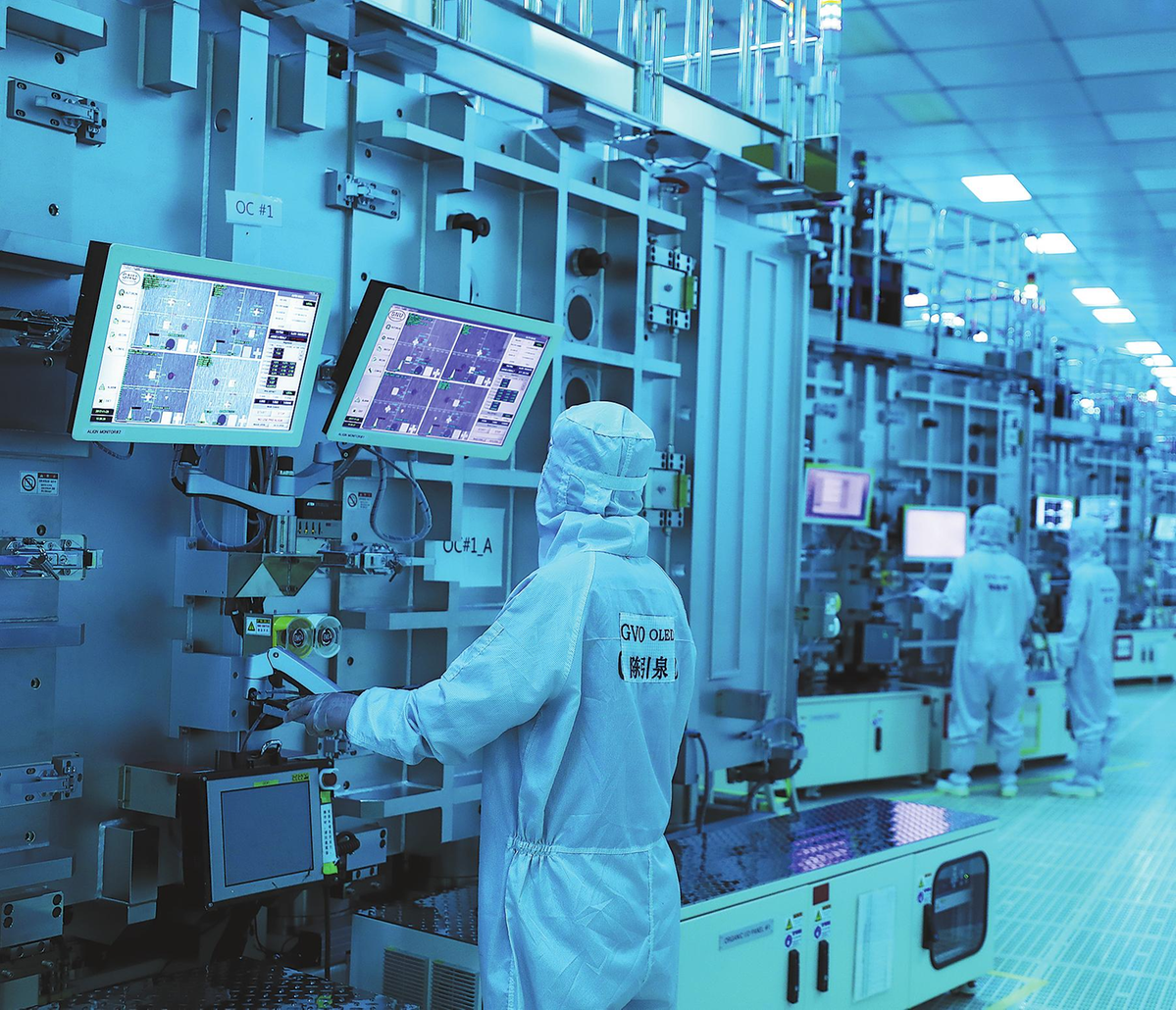
On the production floor of Visionox, one of the world's leading suppliers of advanced displays based in Kunshan, Jiangsu province, a line of technicians in cleanroom suits closely monitor a sheet of deep-purple glass the size of a door.
A few kilometers away, the scene could not be more different: forklifts shuttle across the yard of KSHG, an auto wire-harness supplier whose customers range from domestic electric vehicle makers to German brands.
At first glance, these companies share little in common except for a Kunshan address. Yet together they capture the twin pillars of a county-level economy that has quietly become one of China's most competitive manufacturing bases.
This is what Kunshan local officials and executives say will define the city's next decade: a dense mesh of optoelectronics, precision components, automotive parts, advanced materials and artificial intelligence-ready electronics.
And it is this mesh — diversified but deeply interlinked — that Chinese policymakers are watching closely as they start shaping the 15th Five-Year Plan (2026-30), a national development blueprint for the next half-decade.
The plan calls for accelerating breakthroughs in key technologies, like in semiconductors, advanced computing, optical communications and display technologies, as well as backing emerging sectors such as AI, quantum information, brain-computer interfaces and low-altitude aviation. The plan also emphasizes the need for cultivating world-class clusters in electronics and equipment manufacturing.
Behind these broad ambitions is a simple calculation: China's next growth cycle will depend on whether traditional manufacturing belts can absorb frontier technologies fast enough to produce globally competitive products at scale.
The fourth plenary session of the 20th Central Committee of the Communist Party of China also reinforced this direction, calling for a modern industrial system anchored in advanced manufacturing, greener supply chains and upgraded infrastructure.
But the message resonating most in places like Kunshan is less ideological and more operational: keep the real economy strong, scale up what works and bring emerging technologies out of the lab and onto factory floors.
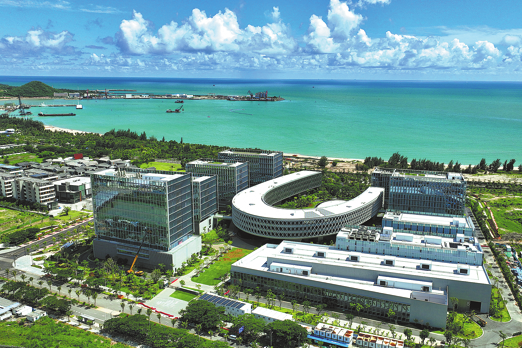
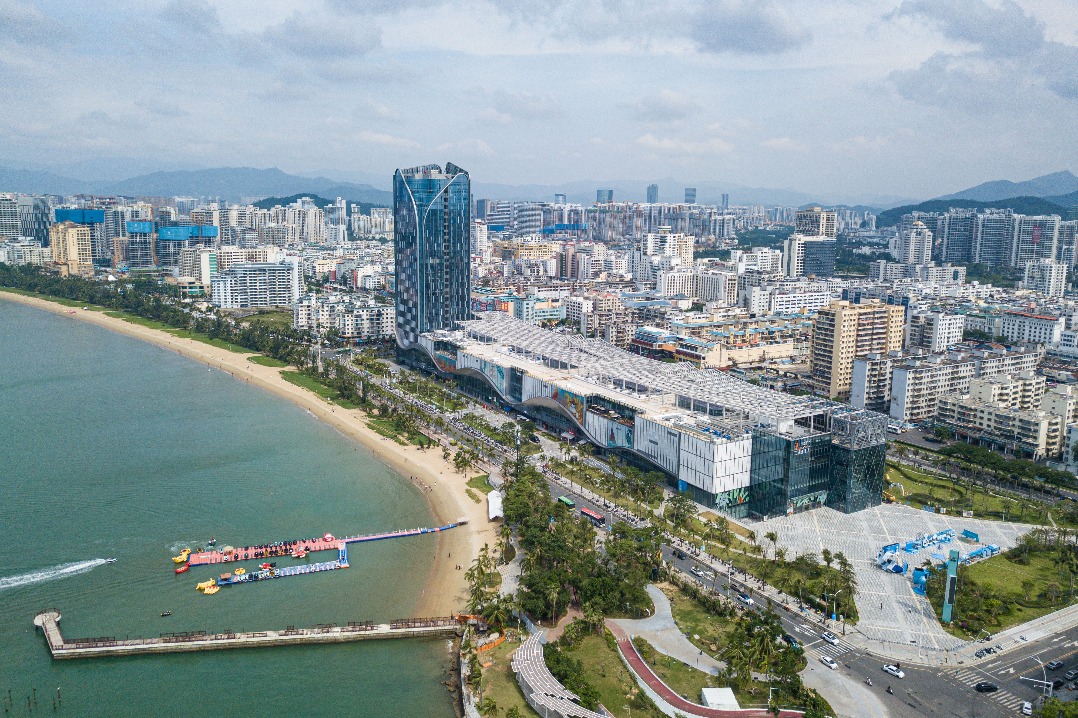
Kunshan, a city of over 2 million near Shanghai, hosts two overlapping engines: a trillion-yuan ($141.6 billion) electronic information cluster led by display panels and optical devices, and a trillion-yuan auto-parts cluster that feeds both domestic and multinational original equipment manufacturers.
Visionox, one of China's leading AMOLED makers, illustrates the first engine. Its Kunshan base has become a strategic asset in China's efforts to build an independent display ecosystem, from materials and equipment to panels and modules.
Zhang Meng, head of innovation management at the innovation center of Visionox, said that the company's work sits at the heart of the policy push for breakthroughs in optical sensing, artificial intelligence and high-end displays.
"Kunshan helps us do two things fast: scale mass production and iterate new generations. Most cities can offer land. Kunshan can align suppliers, tooling partners, logistics and talent within months," Zhang said.
That velocity reflects the density of the cluster around it. The city hosts more than 200 supporting firms — from mask plate and polarizer makers to precision component providers — giving Visionox an ecosystem that shortens development cycles and buffers geopolitical shocks.
The result is a supply chain nimble enough to push into emerging display types such as foldable, micro-OLED and automotive-grade panels, all areas aligned with national priorities for advanced materials and intelligent terminals.
If Visionox represents frontier electronics, KSHG embodies the other half of Kunshan's industrial equation: labor-intensive foundations that are quietly reinventing themselves.
Founded decades ago, KSHG, a wire-harness assembler, now operates in an industry transformed by electrification, autonomous driving and the software-defined vehicle.
Wire harnesses — once simple bundles of copper and connectors — have evolved into intelligent nervous systems carrying signals, data and power across increasingly complex EV architectures.
Cheng Sanrong, chairman of KSHG, said high-voltage wiring, lightweight aluminum conductors, optical interconnects and multilayer sensor cabling are now standard.
The company has poured resources into process automation, real-time quality traceability and digital production lines — the type of incremental, applied innovation policymakers say is essential for strengthening the high-end of industrial chains.
A recent push involves collaborating with Kunshan's AI and electronics startups to develop semi-automated harness design tools and predictive maintenance systems — an early example of the city's push to integrate emerging digital capabilities with long-standing manufacturing strengths.
"As vehicles become more electronic and more intelligent, wiring harness goes from being a cost item to a competitive advantage," Cheng said. "We don't need slogans. We need faster iteration and closer integration with display, sensor and computing suppliers — all industries Kunshan already has."
What differentiates Kunshan from many manufacturing cities is its combination of industrial depth and administrative agility. The city handles tens of thousands of tech-related business approvals each year, with executives consistently describing a process "closer to corporate project management than public administration".
That efficiency matters as the 15th Five-Year Plan emphasizes world-class industrial clusters. The policy language speaks of "coordinated cluster building" across electronics, equipment manufacturing, new materials and future industries.
Infrastructure upgrades are also accelerating. The city is expanding clean-energy capacity, upgrading cross-regional logistics, and piloting industrial data platforms aligned with the national computing-network strategy. For display makers, that means more stable power and cleaner water. For auto-parts suppliers, it means faster prototyping cycles with local electronics firms.
Although Kunshan's economic base is built on tangible goods, local officials know that the next wave of growth also requires a future-industry layer aligned with national priorities: AI engineering, advanced computing, optoelectronics, low-altitude aviation and next-generation communications.
The city has started attracting companies working on optical sensors, AI-ready micromodules and lightweight aerospace composites — areas that link Visionox-style photonics with KSHG-style automotive systems. This bridging role positions Kunshan not merely as a manufacturing center, but as a sandbox where traditional industries blend with frontier technologies.
Industry experts said that the city's ambition is not to lead every frontier, but to turn promising technologies into manufacturable products faster than competitors. In other words: keep doing what Kunshan already does well, but with a higher-tech ceiling.
For Kunshan, the path ahead is straightforward: refine the old, cultivate the new, and continue turning industrial ambition into factory-line reality.
Yet Kunshan's ambitions do not end with electronics and automotive hardware. On the city's eastern edge, in the fast-growing district of Huaqiao, a different kind of industrial experiment is underway — one that hints at how Kunshan wants to broaden its industrial base beyond manufacturing in the narrow sense.
Along Chenfeng Road stands the Huaqiao Chenfeng Fashion and Creative Industry Park, a project jointly developed by the local economic development zone and Chenfeng Group, together with national textile associations and leading fashion schools such as Donghua University.
The park is deliberately unlike the cleanrooms and component workshops elsewhere in the city. Its studios and open labs blend textile heritage, digital culture, design education and new retail — an attempt to build a fashion ecosystem with both cultural depth and commercial scalability.
Yin Jiajue, chairman of the board at Chenfeng Group, described it as "a supply-chain super platform for China's emerging fashion designers".
She said that it houses talent training centers, independent designer ateliers, brand headquarters, livestreaming studios and factory-direct retail — all stitched together into a vertically integrated creative-production system. The local population calls it China's "fashion dream factory".
The numbers suggest that the formula is working. Nearly 150 fashion firms and institutions have taken up space, including 47 brand headquarters and dozens of startups founded by designers trained at the park's partner universities.
More than 85 independent design teams, supported by almost 300 designers, use the park's rapid-sample and small-batch production lines to launch new labels. Livestreaming studios on the upper floors — 38 at last count — feed a pipeline of digitally native brands into China's enormous apparel market.
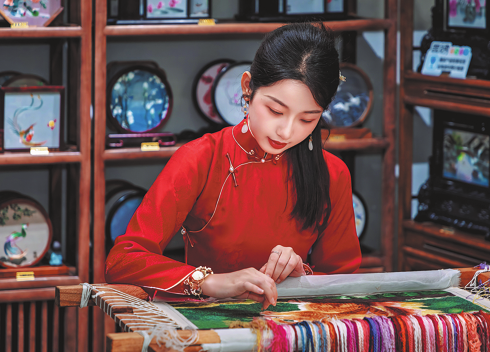
The park has already produced several breakout names. Newly launched niche brands have found traction by mixing advanced fabrics with traditional techniques and handcrafted mulberry-silk work, giving heritage crafts a second commercial life.
Recognition has followed. The park has been designated a demonstration zone for textile and apparel creative design by the Ministry of Industry and Information Technology, as well as a green supply-chain pilot.
One thing seems certain: in China's next growth cycle, the future of advanced manufacturing may not only be written in laboratories, but also in workshops where purple display glass meets copper wiring, and where emerging technologies finally define the next generation factory floor.



Today's Top News
- China to continue anti-dumping duties on EPDM imports
- Trump says war with Venezuela remains possible -- NBC News
- China urges Japan to stop challenging intl bottom line with its nuclear ambitions
- US arms sales to Taiwan a dangerous gambit: Editorial flash
- Taiwan opposition lawmakers announce plan to impeach Lai Ching-te
- Boosting consumption will be key in 2026