


Kunshan setting up world-class industrial hubs
Development blueprint for next five years to focus on 'coordinated cluster building' across electronics, equipment manufacturing, new materials and future industries










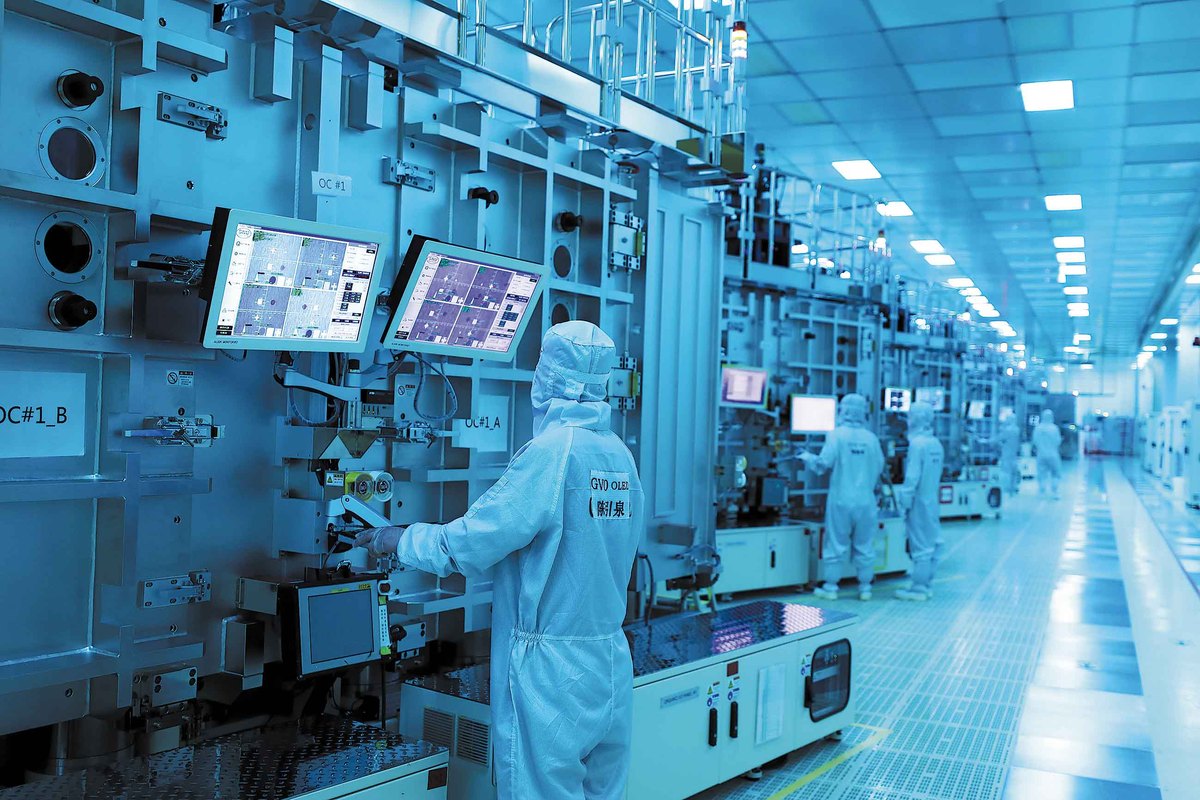
Infrastructure upgrades are also accelerating. The city is expanding clean-energy capacity, upgrading cross-regional logistics, and piloting industrial data platforms aligned with the national computing-network strategy. For display makers, that means more stable power and cleaner water. For auto-parts suppliers, it means faster prototyping cycles with local electronics firms.
Although Kunshan's economic base is built on tangible goods, local officials know that the next wave of growth also requires a future-industry layer aligned with national priorities: AI engineering, advanced computing, optoelectronics, low-altitude aviation and next-generation communications.
The city has started attracting companies working on optical sensors, AI-ready micromodules and lightweight aerospace composites — areas that link Visionox-style photonics with KSHG-style automotive systems. This bridging role positions Kunshan not merely as a manufacturing center, but as a sandbox where traditional industries blend with frontier technologies.
Industry experts said that the city's ambition is not to lead every frontier, but to turn promising technologies into manufacturable products faster than competitors. In other words: keep doing what Kunshan already does well, but with a higher-tech ceiling.
For Kunshan, the path ahead is straightforward: refine the old, cultivate the new, and continue turning industrial ambition into factory-line reality.
Yet Kunshan's ambitions do not end with electronics and automotive hardware. On the city's eastern edge, in the fast-growing district of Huaqiao, a different kind of industrial experiment is underway — one that hints at how Kunshan wants to broaden its industrial base beyond manufacturing in the narrow sense.
Along Chenfeng Road stands the Huaqiao Chenfeng Fashion and Creative Industry Park, a project jointly developed by the local economic development zone and Chenfeng Group, together with national textile associations and leading fashion schools such as Donghua University.
The park is deliberately unlike the cleanrooms and component workshops elsewhere in the city. Its studios and open labs blend textile heritage, digital culture, design education and new retail — an attempt to build a fashion ecosystem with both cultural depth and commercial scalability.
Yin Jiajue, chairman of the board at Chenfeng Group, described it as "a supply-chain super platform for China's emerging fashion designers".
She said that it houses talent training centers, independent designer ateliers, brand headquarters, livestreaming studios and factory-direct retail — all stitched together into a vertically integrated creative-production system. The local population calls it China's "fashion dream factory".
The numbers suggest that the formula is working. Nearly 150 fashion firms and institutions have taken up space, including 47 brand headquarters and dozens of startups founded by designers trained at the park's partner universities.
More than 85 independent design teams, supported by almost 300 designers, use the park's rapid-sample and small-batch production lines to launch new labels. Livestreaming studios on the upper floors — 38 at last count — feed a pipeline of digitally native brands into China's enormous apparel market.
The park has already produced several breakout names. Newly launched niche brands have found traction by mixing advanced fabrics with traditional techniques and handcrafted mulberry-silk work, giving heritage crafts a second commercial life.
Recognition has followed. The park has been designated a demonstration zone for textile and apparel creative design by the Ministry of Industry and Information Technology, as well as a green supply-chain pilot.
One thing seems certain: in China's next growth cycle, the future of advanced manufacturing may not only be written in laboratories, but also in workshops where purple display glass meets copper wiring, and where emerging technologies finally define the next generation factory floor.





