


A legendary journey from Hangzhou's West Lake to New York
Reimagining a centuries-old Chinese folk tale through experimental theater, a Yale student brings The Legend of the White Snake to contemporary, multicultural audiences in the US through the medium of Mandarin.










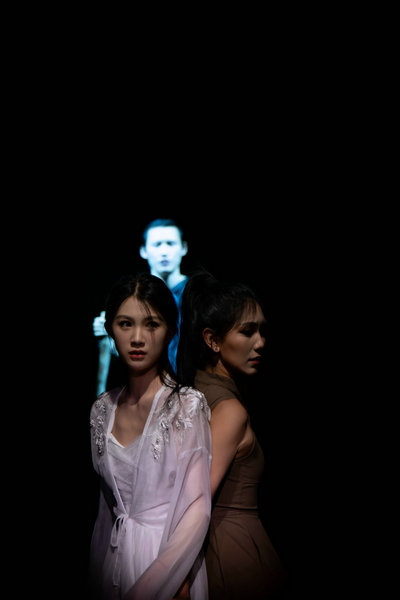
The play's title carries a clever double meaning. It refers to Qing and Bai, the two heroines whose destinies are intertwined, and echoes the Chinese word qingbai, meaning "innocence". According to the creators, the production explores the universal theme of self-definition, questioning who gets to judge one's innocence in a world full of prejudice and scrutiny.
"In our version, Bai Suzhen is constantly questioned and scrutinized by Fahai, even pressed to prove her own innocence," says He, noting that Bai's predicament, being forced repeatedly to justify herself, is in fact very common within a broader cultural context.
"What we are concerned with is not whether Bai Suzhen is innocent, but this: when a person is constantly interrogated, suspected and required to justify themselves, how do they gradually come to understand themselves and even choose anew who they want to become?"
Despite being staged in the US, the production was performed entirely in Mandarin, with carefully crafted English subtitles.





