

Brain-computer interface gives hope to paralyzed people
Major advances made, with neural technology aiding movement in clinical phase










Clinical realities
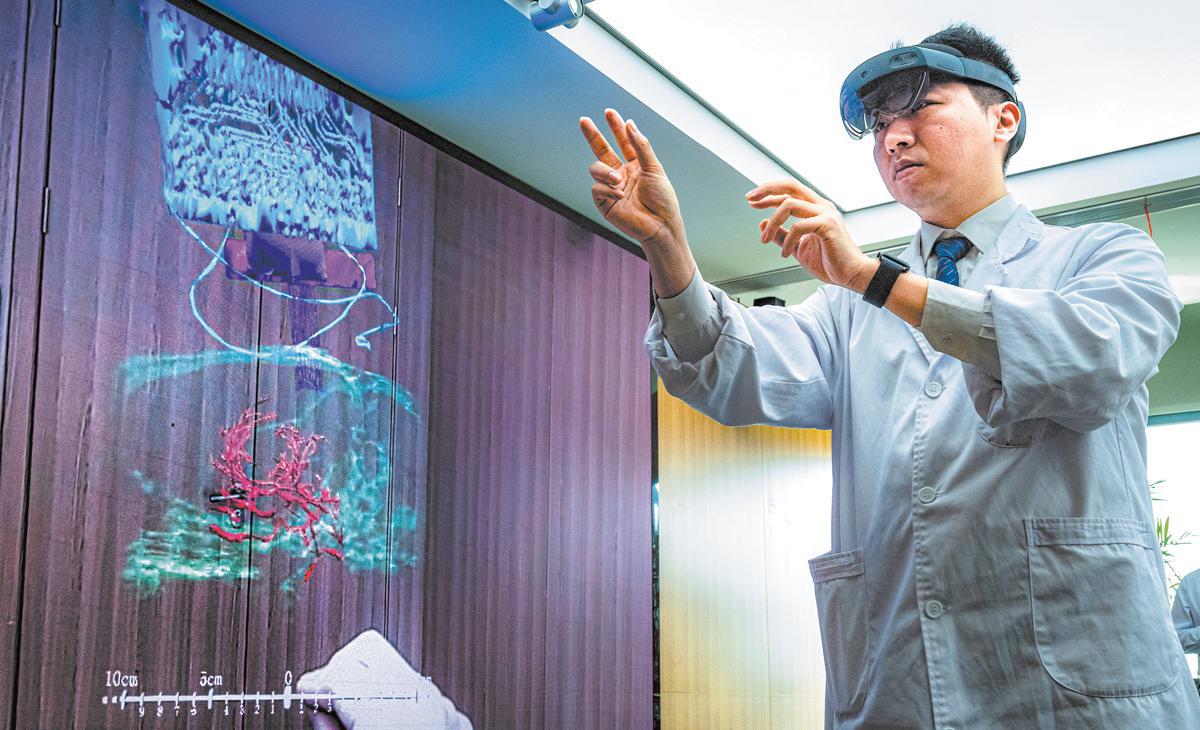
At present, BCI can only achieve basic movement control, such as gripping a cup or playing simple games. The next focus is on language decoding and more complex motor control.
"Right now, we are just going slowly from 0 to 1, and in the future, we will go faster from 1 to 100," said Qu, the professor.
In July 2024, Shanghai surgeons implanted a device with 256 probes into the superior parietal cortex of a female epilepsy patient. After two weeks of practice, she could use social media apps and control a wheelchair with the device.
In December, the same team also implanted probes into a female epilepsy patient with a tumor in her brain's language processing area. The user could communicate in Mandarin at 50 words per minute with a delay of only 100 milliseconds — the first time BCI technology has been used for real-time decoding of Mandarin.
Non-invasive BCI is also another key area of development. Chinese teams are developing head-mounted devices to avoid craniotomy. However, at present the signals weaken significantly after passing through the skull, making the technology more challenging.
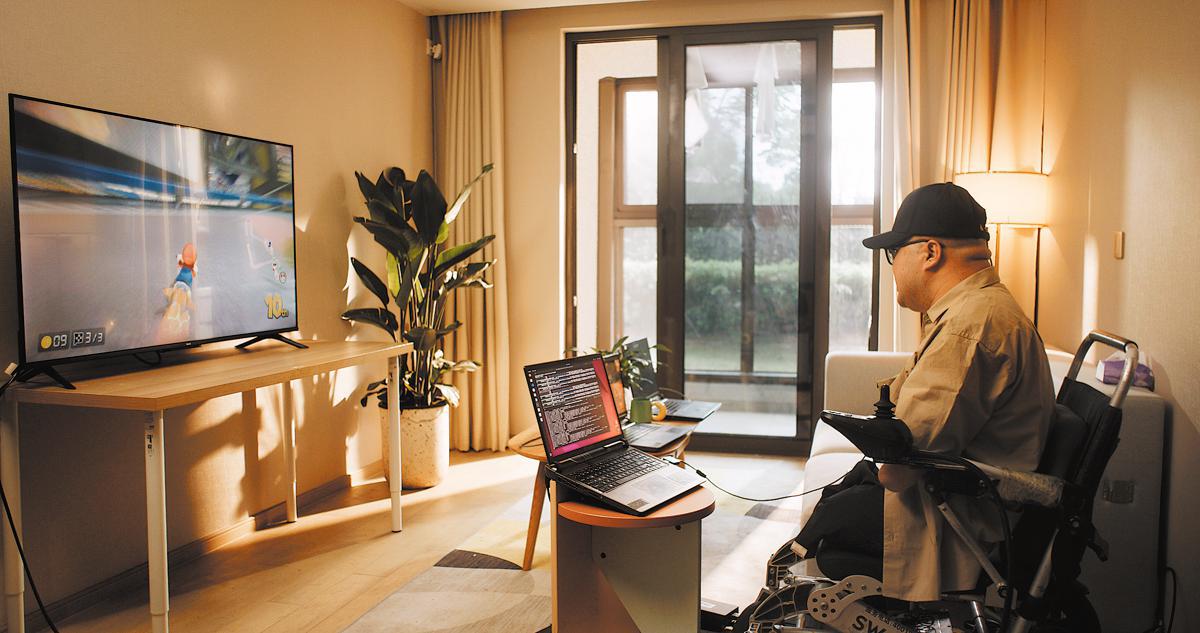
Wang in the Langfang nursing home said he is willing to take the risk. "If the effect is immediate, I am willing to try. I cannot wait much longer," he said.
As of now, no BCI device has been officially approved for the commercial medical market in China. All reported "success cases" remain in the clinical trial stage.
Wang is still waiting in the nursing home for an evaluation notice. In summer, he heard that recent hot weather had delayed hospital evaluations, and remote evaluations will have to wait until later.
He still stares at his phone every day, reading messages in the patient group. Some share news of new drug trials, some discuss care experiences, and occasionally someone forwards news about BCI.
"I know it may not be my turn," he said, "but as long as there is hope, I am willing to wait."
weiwangyu@chinadaily.com.cn