



Social media ban kicks in for Australia's under-16s








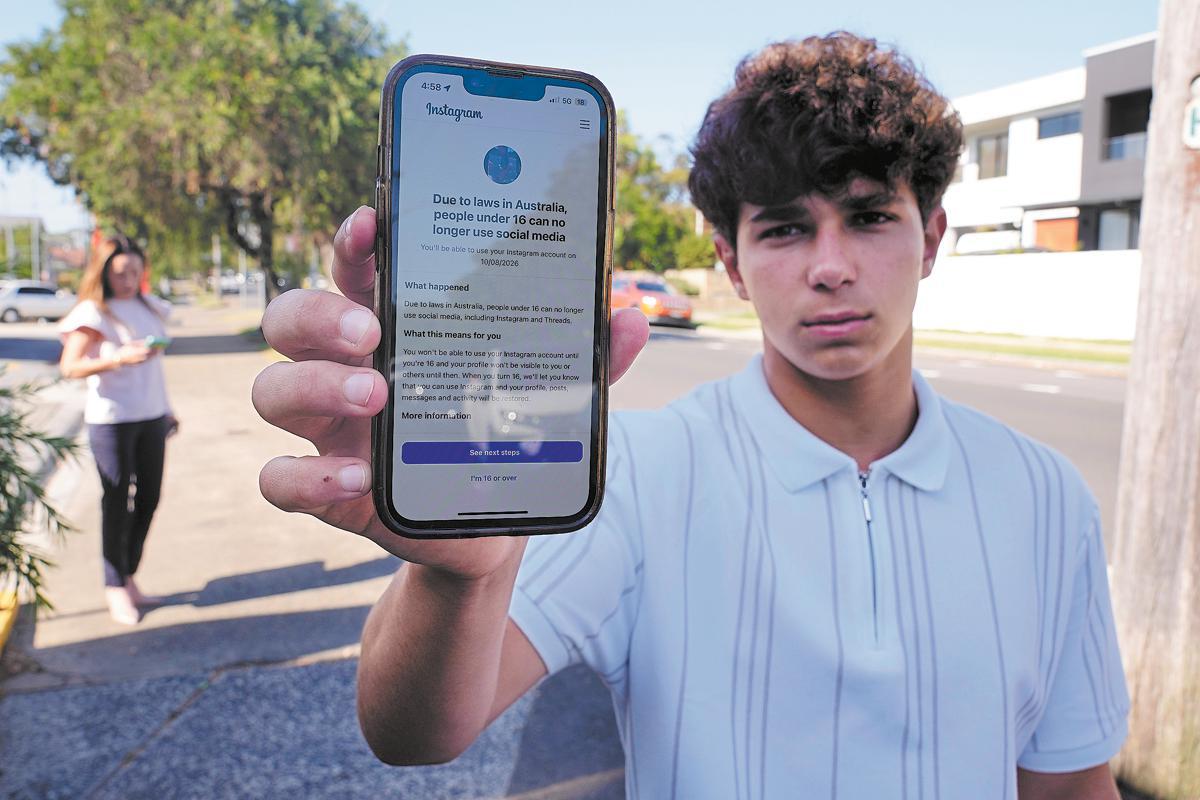
Australia's social media ban for children under 16 — the first of its kind in the world — formally took effect on Wednesday, marking a major shift in online safety governance, as experts urged the public to correctly understand the ban's implications and regulatory focus.
Instagram, Facebook, Threads, X, Snapchat, Kick, Twitch, TikTok, Reddit and YouTube are among the platforms required to enforce the new legislation. If platforms fail to take reasonable steps to prevent underage users from having accounts, they face civil penalties of up to A$49.5 million ($32.9 million).
"This is a day in which my pride to be prime minister of Australia has never been greater. This is world-leading," Australian Prime Minister Anthony Albanese said on Wednesday.
"Our social media ban is about making sure kids have a childhood," Albanese said in videos posted on X and Instagram. "It's not going to be perfect, but it's too important not to give it a crack."
Julian Sefton-Green, a professor of new media education at Deakin University, told China Daily that the legislation should be understood in terms of who is being targeted, what the ban is trying to do, and how its outcomes will be evaluated.
"The ban is not so much a ban on users, it's a ban on social media companies acting irresponsibly by permitting young people to have full access to their platforms," said Sefton-Green, who is also a member of the Australian eSafety Commissioner's advisory group that explores the implementation and outcomes of the nation's "Social Media Minimum Age" obligations.
Sefton-Green said the best way to think about the ban is that it is "an attempt by a national government to assert its power over the influence that foreign-owned social media platforms have on its population".
"It's going to be evaluated by a range of research which will look at what difference it makes to young people's happiness, their well-being, their capacity to grow up and enjoy their lives happily," he said, adding that impact on family interactions and any changes to young people's social relationships and sources of information will also be assessed.
Sefton-Green said the effect of the ban will not be known for "two or three years", and the further steps needed for its effective implementation across society are "in a way up for grabs".
Most major platforms said that they would comply with the law.
TikTok said in a statement that it offers a range of methods for doing so, including facial age estimation, credit card authorization and government-approved identification.
"We understand that these changes may be upsetting, but they are necessary to ensure that TikTok complies with Australian law," TikTok said.
Two weeks ahead of the ban's implementation, a news conference was held at Parliament House in Canberra, where teenagers were invited to raise questions about how the new rules would affect their daily lives, education and future careers.
"Our careers in 10 years will look very different to those of our parents. With the delay of social media, will this impact young children wanting a career in the digital industry, or those who are already online entrepreneurs?" asked Mia, a student representative.
Albanese reassured students that the reforms would not hinder their future opportunities. He said that evidence shows that "by stopping the negative impact of social media, people will be much more comfortable engaging in digital activity as well, because (they) will be doing it in a way that is safer".
However, Tom Sulston, head of policy at Digital Rights Watch, a group that advocates protection of Australians' digital rights, said that "the ban will drive young people onto platforms that remain unregulated", which "are likely to be even more dangerous that those they currently know how to use".
Sulston said the law may affect how young people's digital rights and privacy are protected.
"Our biometric data, in the shape of age-estimation selfies, and our identity documents, will be distributed around the Internet to companies potentially outside Australia's jurisdiction, where our data could be repurposed without our consent," he added.
Similar policies
The Australian model has attracted global interest, with other countries considering similar policies.
New Zealand's Prime Minister Christopher Luxon has described himself as "deeply supportive" of such a ban, and said the government is looking at the Australian model and other bans with a view to introducing legislation, according to Radio New Zealand.
Fahmi Fadzil, Malaysia's communications minister, has announced plans to prevent users under 16 from signing up for social media accounts next year as part of efforts to better protect children online, according to Malaysian newspaper The Star.
Denmark reached an agreement in November to ban children under 15 from using social media, while allowing parents to grant exemptions for younger children. Prime Minister Mette Frederiksen said the decision strikes a balance between regulation and family autonomy, according to The Copenhagen Post.
In Germany, those between the ages of 13 and 16 are allowed to use social media on the condition that their parents provide consent.
xinxin@chinadaily.com.cn










