


Taiwan's status ironclad, brooks no interference: China Daily editorial









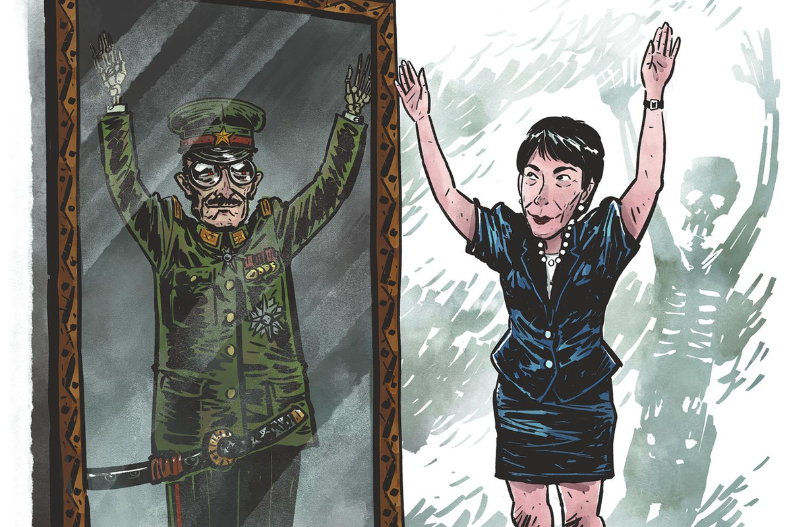
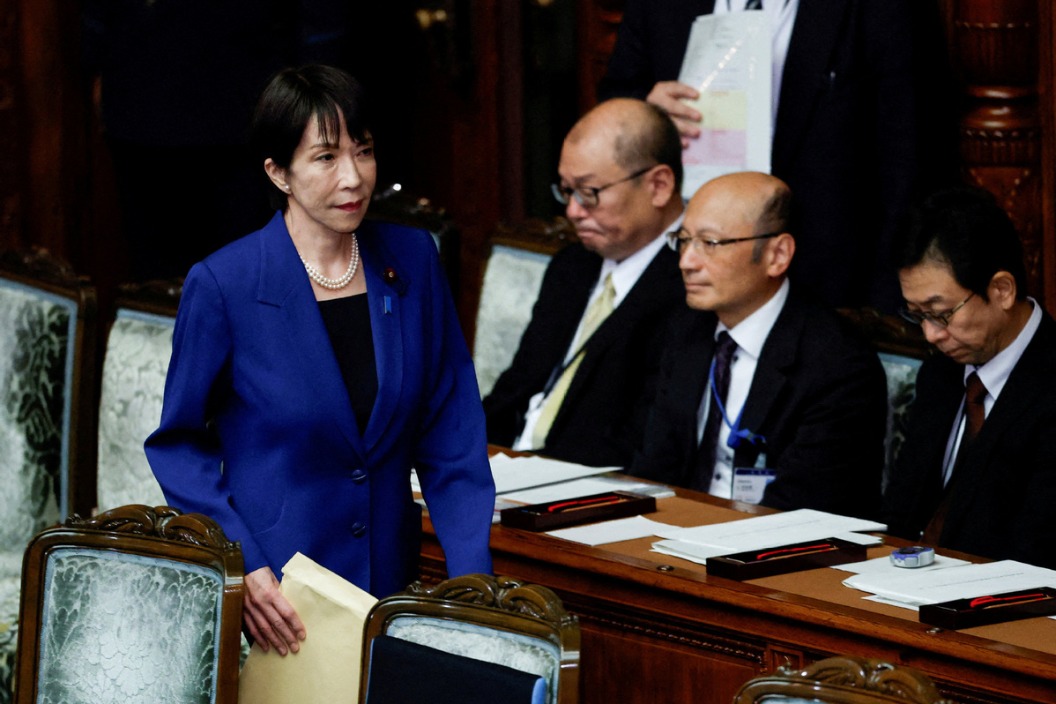
The erroneous and dangerous remarks made by Japanese Prime Minister Sanae Takaichi on the Taiwan Strait situation blatantly contravene the commitments Japan has made to China, directly challenge the outcomes of the victory in World War II and the postwar international order, and present serious risks to peace in Asia and the world at large.
This year marks the 80th anniversary of the victory in the Chinese People's War of Resistance Against Japanese Aggression (1931-45) and the World Anti-Fascist War. Japan, as a defeated nation, should have taken the opportunity to undertake reflection and acted with greater caution.
Instead, "its current leader is trying to exploit the Taiwan question — the very territory Japan colonized for half a century, committing countless crimes against the Chinese people — to provoke trouble and threaten China militarily", as Chinese Foreign Minister Wang Yi said in his talks with visiting German counterpart Johann Wadephul in Beijing on Monday.
Taiwan is an inalienable part of China. The historical and legal facts affirming Taiwan's status as China's territory in the postwar international order are ironclad. The Cairo Declaration issued in 1943 stated clearly that all the territories Japan had stolen from China, including Taiwan and the Diaoyu Islands, should be restored to China.
Article 8 of the Potsdam Proclamation jointly issued by China, the United States, the United Kingdom and the Soviet Union in 1945 stipulated the implementation of the terms of the Cairo Declaration. On Aug 15, 1945, Japan surrendered unconditionally, with the Japanese Emperor committing to faithfully fulfill the provisions of the Potsdam Proclamation. On Oct 25, 1945, the Chinese government announced that it was resuming the exercise of sovereignty over Taiwan. A ceremony to accept Japan's surrender on the Chinese island was held in Taipei.
After the People's Republic of China was founded on Oct 1, 1949, the Central People's Government in Beijing became the only legitimate government of the whole of China. As a natural result, the government of the PRC should exercise sovereignty over all Chinese territory, including Taiwan.
At its 26th session in 1971, the United Nations General Assembly adopted Resolution 2758, which undertook to restore all its rights to the PRC, and to expel forthwith the "representatives" of the Taiwan authorities from the place at the UN. The UN's official legal opinion confirms that Taiwan is a province of China.
The 1972 Sino-Japanese Joint Statement states that "The Government of Japan recognizes the Government of the People's Republic of China as the sole legal Government of China. The Government of the People's Republic of China reiterates that Taiwan is an inalienable part of the territory of the People's Republic of China. The Government of Japan fully understands and respects this stand of the Government of the People's Republic of China, and it firmly maintains its stand under Article 8 of the Potsdam Proclamation." The 1978 Treaty of Peace and Friendship Between China and Japan confirms that the principles set forth in the Sino-Japanese Joint Statement should be strictly observed.
All these are incontrovertible.
Attempts to pursue "Taiwan independence" mean splitting China's territory and supporting "Taiwan independence", which amounts to interference in China's internal affairs and violates both China's Constitution and international law. This is totally unacceptable.
All peace-loving people around the world bear the responsibility to uphold the purposes and principles of the UN Charter and Taiwan's legal status as part of China, as there are still people, such as Takaichi, who are trying to mislead people in Japan and those in the world arena with their wrong views on the Taiwan question.
The thorough elaboration on the Taiwan question from historical, factual and legal perspectives provided by Wang is an antidote to the poisonous words of those who harbor an ulterior intention to interfere in the Taiwan question.
In fact, the egregious nature of Takaichi's provocative remarks on Taiwan — which are the first time since Japan's defeat in 1945 that a Japanese leader has advocated in an official setting the notion that "a contingency for Taiwan is a contingency for Japan", the first time Japan has expressed ambitions to intervene militarily in the Taiwan question, and the first time Japan has issued a threat of force against China — have already drawn condemnation both at home and abroad.
In a latest instance of this, Japan's Yomiuri Shimbun reported on Monday that Mizuho Fukushima, leader of Japan's Social Democratic Party, asked Takaichi to retract her remarks on Taiwan and resign as prime minister when delivering a speech on "The Nature of the Takaichi Cabinet" in Koriyama, Japan's Fukushima Prefecture, on Dec 7.
China has thus far responded to Takaichi's provocations with a set of nonmilitary measures to defend its lawful rights and core interests. These coordinated actions serve as a clear and firm demonstration that any attempt to undermine the one-China principle or cross Beijing's red line on the Taiwan question through "salami-slicing" tactics will not be tolerated.