



Ancient 'bestie' figurine charms modern museum visitors









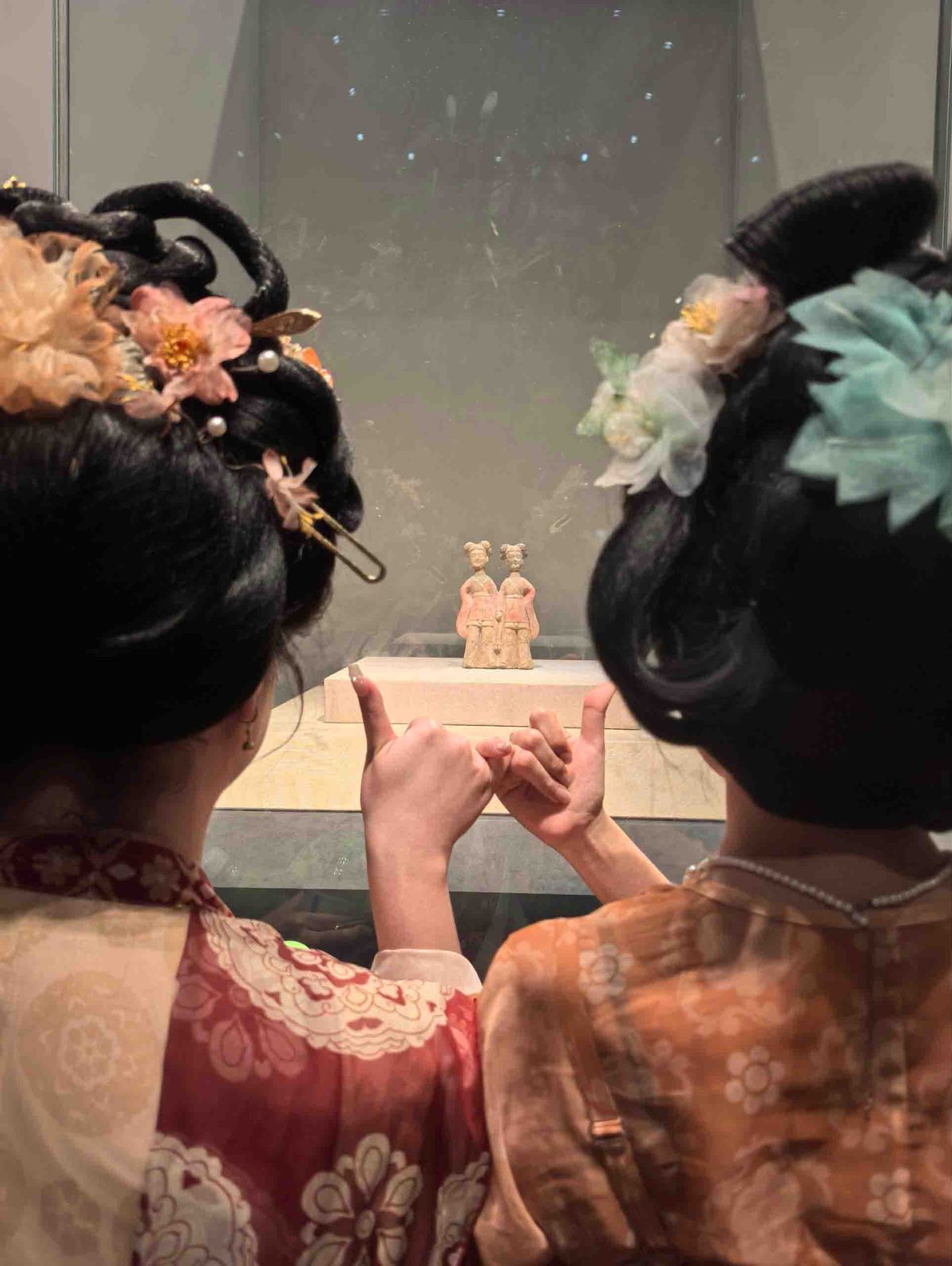
He added that the "hand-holding figurines" might have been an artisan's spontaneous expression of emotion about 1,500 years ago. "Little did they know that their work would evoke a cross-temporal emotional connection with people millennia later."
He suggested that museums leverage public interest to deepen historical and cultural knowledge dissemination.
Du Xiaofan, a professor at the Department of Cultural Heritage and Museology of Fudan University in Shanghai, said that in recent years, what captures public attention isn't always the artifacts of critical significance in the development of Chinese civilization.
"People are now more drawn to exhibits that offer emotional comfort, joy, or personal resonance. These artifacts, whether intentionally or not, connect with modern audiences on an emotional level, making them more relatable and engaging," he said.
According to Du, traditional museums traditionally focus on helping the public understand the past by presenting historical facts. But today, they must evolve and inspire visitors to reflect on their present lives and future possibilities.
Museum professionals should incorporate these insights into exhibition planning and presentation methods, ensuring that cultural heritage remains relevant and meaningful to all audiences, he added.


- Chinese researchers develop computational framework to study aging
- China launches pilot program for AI ethics review, services
- Birdwatching enthusiasts work with local authorities in Qinhuangdao
- Health authorities: No risk of Hantavirus transmission in Yibin
- Chinese premier chairs State Council executive meeting
- Xinjiang to leverage energy resources to meet national goals





