



Research stations established in South China Sea









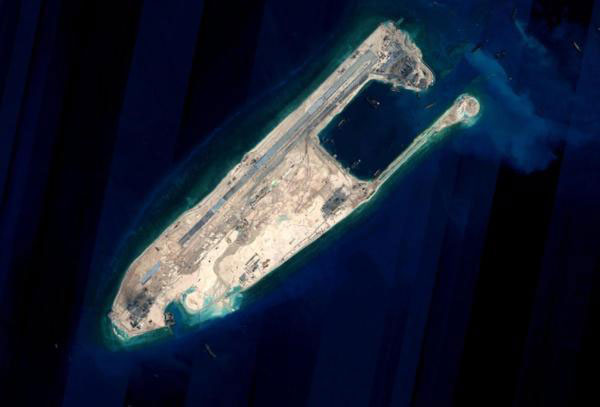
The Chinese Academy of Sciences has established two research stations on Yongshu and Zhubi islands in the South China Sea to allow scientists to live and conduct field studies on ecology, geology and environment.
The Yongshu station already has systems monitoring coral reef biomes, the island's flora and fresh water conservation. On the Zhubi islands, it recently finished the designs for its seismic stability and fresh water monitoring systems.
The academy said the stations will help scientists expand their research into deep sea ecology, geology, environment, material sciences and marine energy. They also play a part in monitoring ecological and seismic changes in key regions of the South China Sea.
The two stations are branches of the academy's general research center on Meiji Island, which was built to support China's undertakings in ecological protection, resource utilization and sustainable development in the South China Sea.
The Meiji research center was launched in 2018 and is run by the academy's newly established South China Sea Innovation Institute for Ecological and Environmental Engineering.
In the future, the center will utilize its location to provide more insights on ocean acidification, reef protection and curbing micro-plastic pollution and marine disasters.


- UK companies seeking larger role in China
- Defense spokesman says Japan risks becoming 'source of turmoil' in East Asia
- Patients as pioneers: A doctor changes cancer research in China
- China-Europe flights emerge as summer travel hotspot
- Blueprint unveiled for Beijing's project 2035
- Summer wheat harvest set to expand nationwide as weather improves





