



Technical optics pioneer: Wang Daheng









|
Died: July 21, 2011 Occupation: Optical scientist Political Party: Communist Party of China (Joined in 1979) |
 Born: February 26, 1915
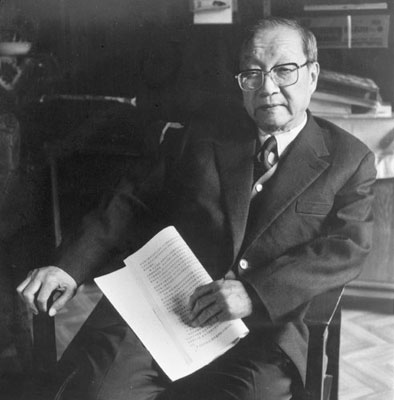
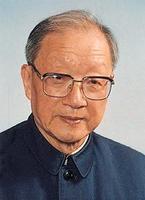
Wang Daheng, male, Han nationality, was born in Tokyo, Japan, on Feb 26, 1915 and was one of the founders of applied optical science and technology in China.
Wang graduated from the department of Physics in Tsinghua University in 1940 and went abroad to study Applied Optics in Britain, where he got his master's degree. In 1942, he became the assistant researcher of Birmingham Company of Britain. He came back to China in 1948.
Wang made outstanding contributions to developing China's precision optical instruments, including the country's first electronic microscope and first laser device.
His endeavor in developing China's laser-triggered nuclear fusion technology earned him the Distinguished Medal for China's atomic bomb, hydrogen bomb and man-made satellite projects.
The scientist's expertise in optics also helped build the crystal coffin of late Chairman Mao Zedong, which was installed at the Chairman Mao Memorial Hall in Beijing.
Wang also contributed to proposing China's 863 Program, a program funded by the central government to develop advanced technologies for the country's major construction projects and national defense.
Wang was an academician of the Chinese Academy of Sciences, Chinese Academy of Engineering, and International Academy of Astronautics.
Wang died on July 21, 2011 at the age of 96 in Beijing.





